
4 Easy Steps to Apply your Sunscreen
Posted on May 19, 2022 by Dr. Blume
 Summer is here which means there are so many summer traditions to unload! BBQ's, fireworks, camp fires, swimming everyday, sunshine and.... sunburns? Who can remember growing up and getting at least 1 nasty sunburn each summer? I bet you raised your hand huh? Let's keep all our favorite summer traditions and scrap that last one shall we? Keep reading to make this summer (and every day) carefree and sunburn free.
We all know the importance of sunscreen. It helps to fight against precancerous and cancerous cells (skin cancer). Sunscreen helps to fight signs of aging, hyperpigmentation, broken capillaries, the break down of collagen and so much more. I'm not here to act like your mother and wave my finger and yell "MAKE SURE YOU PUT YOUR SUNSCREEN ON!", (well maybe a little). The truth is, any form of sun exposure equals to sun damage. Read that again. Any form of sun exposure equals to sun damage. The UV rays are all around us, even when we're inside sitting next to a window. So making sure we are PROPERLY protected is incredibly important. Let's cover our bases.
SPF stands for Sun Protection Factor which is how the protection is measured. The higher the SPF number the better the protection. This has been common place for years. A few common ingredients found in higher SPF numbered sunscreens are avobenzone and parsol 1789. This is considered a chemical sunscreen. This was extremely popular in the 1990's and early 2000's. The other type of sunscreen is physical sunscreen. These typically contain zinc and/or titanium dioxide. These ingredients act as more of a shield towards the UV rays. Both types of sunscreen will absorb the UV rays, however the physical sunscreen will reflect the UV rays making it a more effective option.
Now that we have broken down the differences in sunscreens, let's apply the right way!
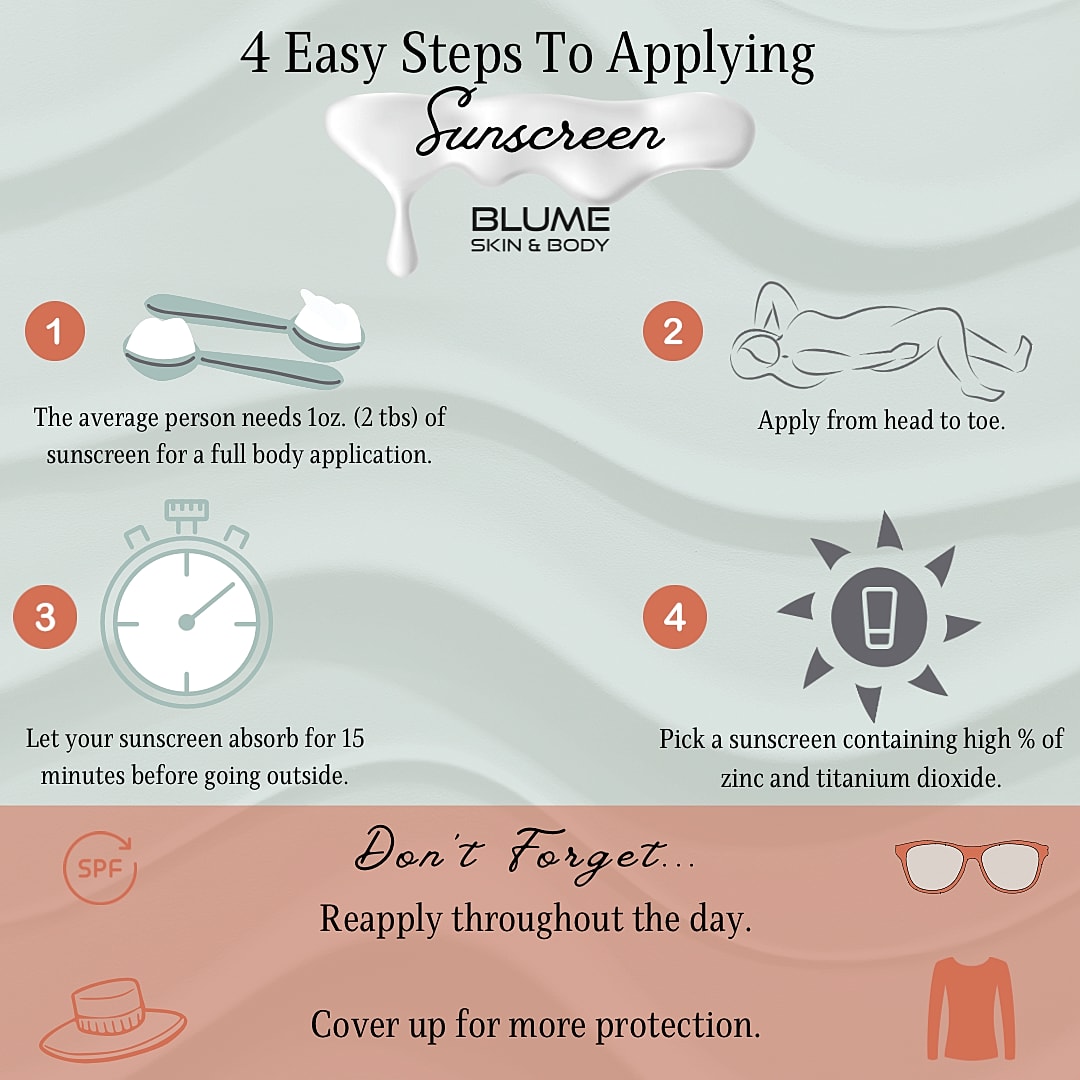
1. The average person needs about an ounce (2 tbs) for a fully body application. Since physical sunscreens contains more mineral based ingredients, the consistency will be slightly more dense. But remember, the protection will be more thorough. This is important in application! Making sure that you are properly covered is key.
2. Apply from head to toe. That's right! Every square inch of your body needs to be covered in order to be protected. We know the basics - face, neck, shoulders, arms, back, legs and feet. But what about the places we commonly forget? - EARS, BACK OF THE HANDS, FINGERS, UNDER THE CHIN, LIPS (spf chapstick), STOMACH, UNDER THE BATHING SUIT AREAS, AND SCALP. If an area of the body is left without sunscreen, there is an increased risk of sunburns and sun damage.
3. Let your sunscreen absorb for 15 minutes before going outside. Since a physical sunscreen has better ingredients, why not apply and hit the road? There is a level of absorption that any sunscreen has to do in order for it to be the most effective. - Pro tip: apply you sunscreen nude (that way you won't miss a spot), get dressed, then pack for the day, and you're ready to go!
4. As stated above, pick a sunscreen containing a high percentage of zinc and/or titanium dioxide. Just like medical-grade skincare, it's the ingredients in the product that does the work to get you the results. Not saying that all other skincare products are "bad', but when it comes to results, you need to know the product is going to work for you and not against you. The same applies with sunscreen. Chemical sunscreens aren't ineffective, however physical sunscreens will provide more protection based on its ingredients and ability to shield.
When you know you're going to be outside for longer periods of time, make sure you reapply your sunscreen every 2-3 hours to stay protected. And to take your protection a step further, make sure you are wearing clothing that covers. Sun protective clothing (shirts and pants) are extremely popular for swimming, hiking and gardening. Wide brimmed hats help to create a larger spectrum of protection for your face, ears, shoulders, neck and chest. And don't forget about your eyes. Sun damage in the eyes is a thing! Invest in good quality sunglasses to protect your eyes from the sun.
At Blume Skin and Body, we have a wide variety of sunscreen to keep you protected while you walk the dog, go swimming, hike your favorite trail and even sitting at your desk at work next to a window. The investment in proper sun protection is far less of an investment than going back and forth to the dermatologist having countless biopsies and surgeries to fix what could have been preventable.